It starts with one quick look at the headlines. Forty minutes later you're still on the sofa, thumb moving, mood a little lower than when you sat down, and you can't quite say what you've just read. If that sounds familiar, you're far from alone, and learning how to stop doomscrolling is easier than most people expect.
Doomscrolling simply means scrolling through a stream of bad news or upsetting content far longer than you meant to. It isn't a character flaw. Apps and our own brains work together to keep that thumb moving, especially late in the evening.
In this guide you'll learn why the habit is so sticky, what the research does (and doesn't) say about mood, anxiety and sleep, and nine gentle, practical ways to take your evenings back. No digital detox required, and no need to stop caring about the world.
What Is Doomscrolling?
The word became common in 2020, when many of us were glued to rolling updates during lockdowns. Today it covers any endless feed of negative content: news, conflict footage, health scares, economic worries, or the comment sections beneath them.
Two things set it apart from simply staying informed:
There's no natural end point. A newspaper finishes. A feed doesn't.
It doesn't leave you better equipped. Reading to understand something leaves you clearer. Doomscrolling usually leaves you more tense, with no new action to take.
Why Your Brain Keeps You Scrolling
Understanding the mechanics helps, because it takes the shame out of it. Three well-known features of the human mind do most of the work.
Negativity bias
People tend to notice and remember negative information more than positive information. It's a sensible survival habit: spotting a threat mattered more than spotting a pleasant view. In a modern feed, that same instinct keeps you hunting for the next alarming update.
Variable rewards
Every scroll might show you something interesting, funny, shocking or useful, or it might show you nothing at all. This unpredictability is the same pattern behind slot machines. Psychologists have long known that rewards which arrive unpredictably are especially good at keeping behaviour going. Pull-to-refresh is a small lever with an uncertain payoff.
Uncertainty and the urge to be ready
When something worrying is happening, your mind wants information so it can feel prepared. Checking feels like doing something. The trouble is that the relief lasts a few seconds, then the next update raises a fresh question, and you check again. It's a loop that feeds on the very anxiety it's trying to soothe.
What Doomscrolling May Do to Mood, Anxiety and Sleep
Here it's worth being honest about the evidence. Most studies on this topic are surveys that capture one moment in time. They show that people who doomscroll more tend to report lower wellbeing, but they can't prove which causes which. Someone who is already anxious may be more drawn to scrolling, and scrolling may then make things worse. Probably both are true.
With that caution in mind, here is what the research broadly suggests:
Area | What studies tend to find | How firm is the evidence? |
Mood | Heavy exposure to distressing news is linked with lower mood and a more negative outlook | Mostly correlational, consistent across studies |
Anxiety | More frequent news checking is linked with higher anxiety and stress, especially during major events | Correlational, some experimental work on news exposure |
Sleep | Screen use close to bedtime is linked with later sleep and poorer sleep quality | Reasonable, though effects vary between people |
On sleep, there are two likely routes. Bright screens and stimulating content can delay winding down, and upsetting material can leave your mind racing when the lights go off. If you've ever lain awake replaying a headline, you've felt the second one. For more on this, our guide to sleep tips that actually work separates the useful habits from the hype.
None of this means that being informed is bad for you. The problem is the pattern: unlimited, unplanned, late at night, and mostly passive.
9 Practical Ways to Stop Doomscrolling
You don't need to do all nine. Pick two or three that feel realistic and build from there.
1. Notice the trigger
Before you change the habit, watch it for a few days. When do you reach for your phone? Often it's a particular feeling: boredom, loneliness, stress, or the need to avoid a task. When you spot the urge, name it quietly ("I'm anxious, and I want to check"). That small pause gives you a choice that automatic scrolling never does.
2. Set app limits that actually bite
Both iPhone (Screen Time) and Android (Digital Wellbeing) let you set daily limits on specific apps. Choose a figure you could honestly live with, such as 30 minutes for news and social apps combined, rather than an aspirational one you'll override within a day.
3. Give your news a window
Instead of dipping in all day, pick one or two set times, say 15 minutes after lunch and 10 minutes after work. Outside those windows, you can still be a person who cares about the world; you just aren't on call for it. Turn off breaking-news notifications so the news waits for you, rather than the other way round.
4. Make your phone less tempting
Small bits of friction add up:
Switch the screen to grayscale in your accessibility settings. Colour is part of what makes feeds so appealing, and a dull screen is simply less rewarding.
Move news and social apps off your home screen, or into a folder on the last page.
Log out after each use, so opening the app takes a few extra seconds.
5. Keep the phone out of the bedroom
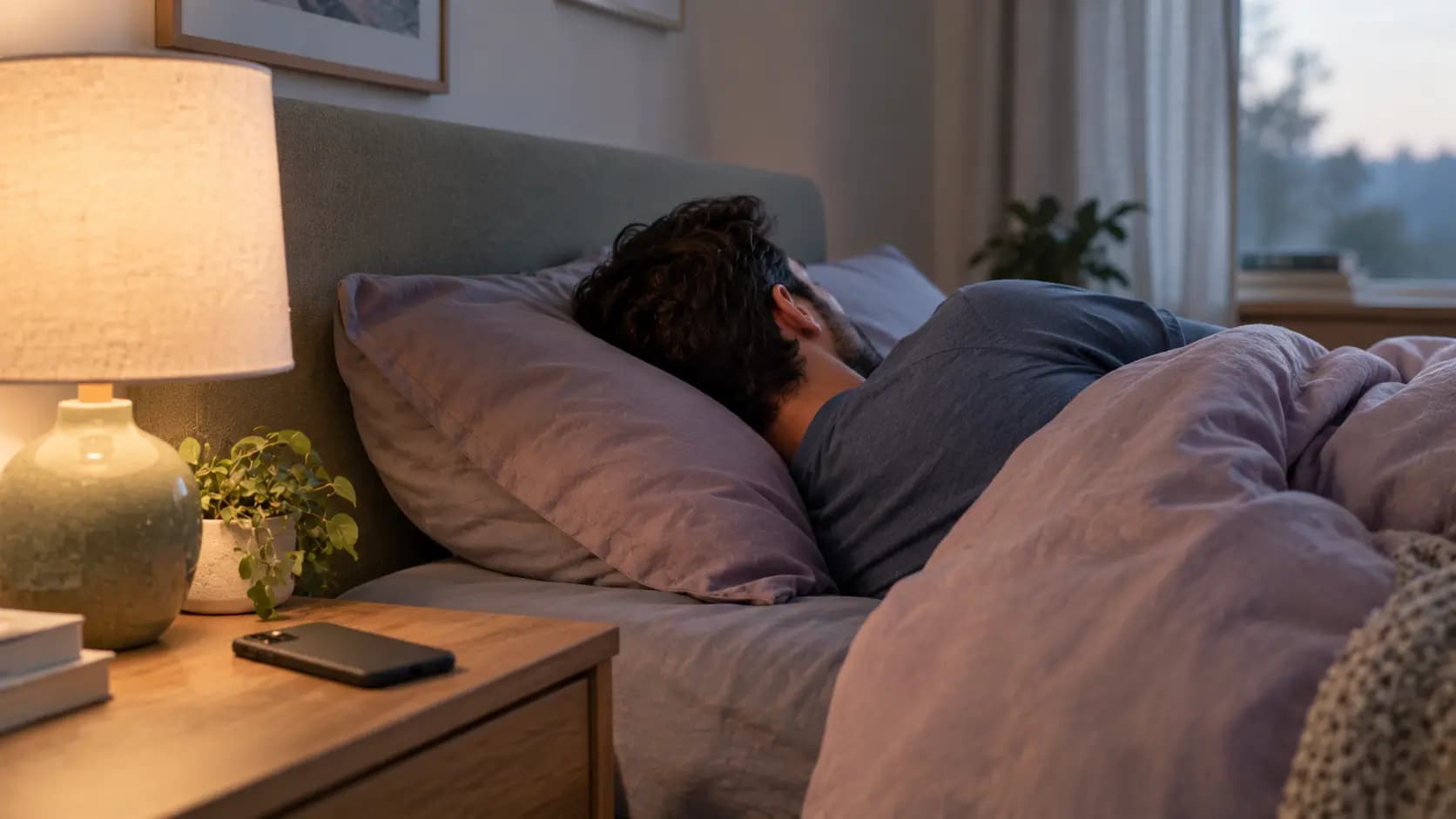
This is the single change many people find most effective, and it's easy to try. Charge your phone across the room, or in another room, and buy a cheap alarm clock if that's your wake-up tool. If that feels like too much, begin by leaving it outside the bedroom for just one or two nights a week.
6. Create a "phone landing spot"
Pick a basket, drawer or shelf near the front door and make it the phone's home when you get in. It's a small ritual that signals the working day is over. The default becomes resting, not in your hand while you cook or eat.
7. Replace the habit, don't just remove it
If you only take scrolling away, a gap appears and the habit rushes back to fill it. Decide in advance what you'll do instead. Good swaps are quick, easy and pleasant: a few pages of a novel, a short walk, a stretch, tea with a neighbour, a puzzle, or a call to a friend. If you struggle to think of options at the moment you need them, build a short list in advance. Our dopamine menu is a handy way to organise replacement activities by how much time and energy you have.
8. Calm your body first
Scrolling often follows a spike of tension, so settling the body can weaken the urge. Try a few slow breaths, with a longer exhale than inhale. Our comparison of box breathing and 4-7-8 shows two simple patterns you can use anywhere. If you've a few more minutes, a 5-minute meditation for beginners is a gentle way to practise noticing urges without acting on them.
9. Curate your feed
Your feed isn't fixed. Mute keywords, unfollow accounts that leave you drained, and follow a few that make you laugh, teach you something or show you something beautiful. It won't remove bad news, but it can stop it ambushing you.
Take a Gentle Approach, Not an Extreme One
It's tempting to respond with a dramatic digital detox: delete everything, go cold turkey, vow never to look again. For some people a short break helps, but extreme plans often collapse within a week, which leaves you feeling like you've failed.
A few ideas that keep things kind:
Aim for "less" rather than "never". Cutting a 60-minute nightly scroll to 20 is a real win.
Expect slips. A big news event will pull you back. Return to your plan the next day.
Act instead of watching. If you care about an issue, one concrete step, like donating or checking on a neighbour, usually helps more than more coverage.
If your doomscrolling is linked with constant exhaustion, cynicism or feeling overwhelmed by everything, it may be part of a broader pattern. Our guide to burnout recovery may help you see the bigger picture. And if your mind loops over worries even when you put the phone down, how to stop overthinking offers practical tools for the thoughts themselves.
When to Seek Help
Doomscrolling is common, and in most cases it can be handled with habit changes. But it's worth talking to a professional if:
Your anxiety or low mood is constant, or has lasted more than a couple of weeks
You're sleeping badly most nights and it's affecting daily life
You can't stop checking even though you want to, and it's damaging work, study or relationships
You're having panic attacks, or thoughts of harming yourself
Start with your doctor or a qualified therapist. If you are in crisis or worried about your safety, contact your local emergency number or a crisis line straight away. In the UK, Samaritans are available on 116 123, at any time.
Frequently Asked Questions
Why do I keep doomscrolling even when it makes me feel bad?
Because the habit is powered by instinct and by unpredictable rewards, not by logic. Your brain pays extra attention to threats, and every refresh might bring something new. Knowing it's bad for you doesn't switch that off, which is why changing your environment tends to work better than relying on willpower.
Is doomscrolling bad for your mental health?
Research links heavy consumption of distressing news with lower mood and higher anxiety. However, most studies can't prove cause and effect. A sensible reading is that unlimited, passive scrolling probably isn't helping, particularly late at night, while short, planned catch-ups with the news are generally fine for most people.
How long does it take to stop doomscrolling?
There's no fixed timeline. Many people notice the urge easing within a couple of weeks of changing their set-up, such as app limits and a bedroom-free phone, but old habits can resurface during stress.
Does grayscale really help?
For some people, yes. Removing colour makes feeds less visually rewarding, so the pull may weaken. Evidence is limited and results vary, so treat it as one easy experiment rather than a cure.
Should I stop reading the news altogether?
Not necessarily. Staying informed is valuable, and complete avoidance isn't realistic for most people. A better aim is to choose when, where and how much you read, using a trusted source, set windows and no late-night browsing.
What should I do instead of scrolling before bed?
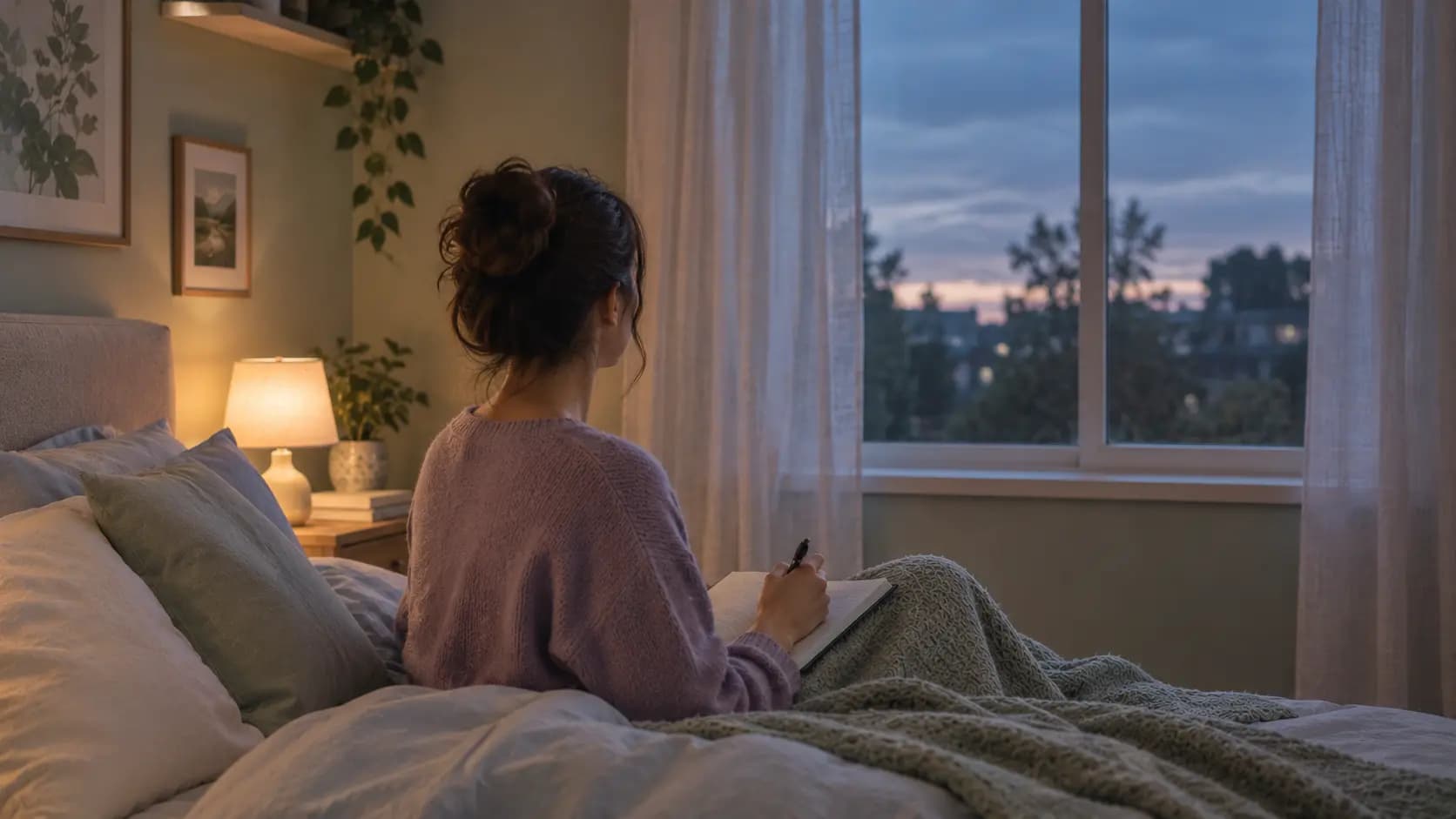
Anything gentle, screen-free and a little boring works well: reading a few pages, a warm shower, stretching, journaling, or slow breathing.
Doomscrolling thrives on three things: your brain's attention to bad news, the pull of unpredictable rewards, and the very human wish to feel prepared. Understanding that makes it easier to be kind to yourself while you change things.
You don't need a dramatic detox. Choose a couple of small steps, like an app limit, a news window or a phone-free bedroom, and give them a fortnight. Replace the scroll with something you actually enjoy, and your evenings will start to feel like yours again.
This article offers general information only and is not medical advice. If you have a mental or physical health condition, or you're worried about your wellbeing, please speak with a doctor or qualified professional.