
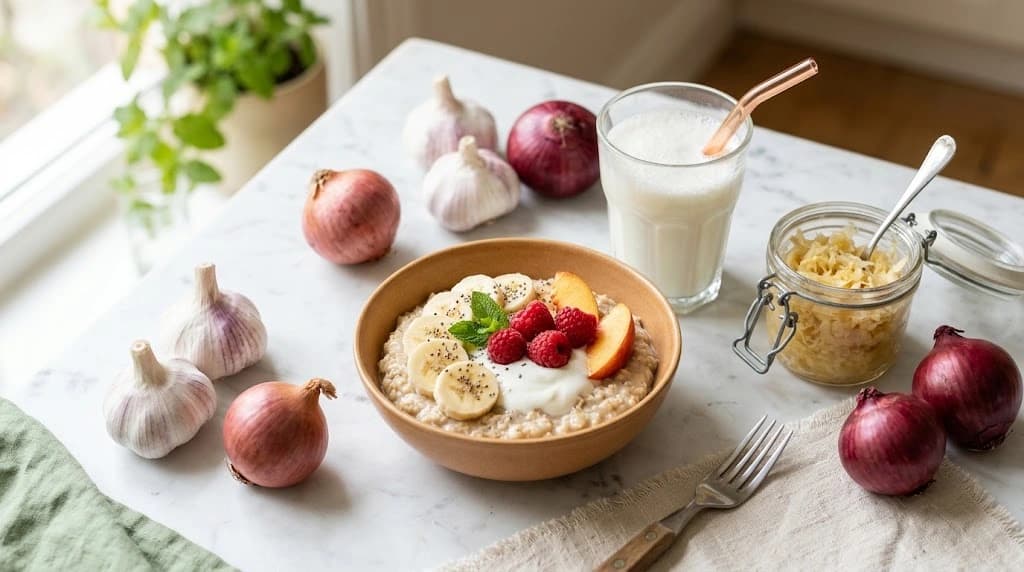
If you have stood in a supermarket aisle staring at yoghurt drinks, fibre powders and "gut shots", you are not alone. The prebiotics vs probiotics debate has become one of the most confusing corners of food and wellbeing, and now there is a third word, postbiotics, to add to the pile.
The good news is that the basics are simple. Prebiotics are food for the helpful microbes already living in your gut. Probiotics are live microbes you swallow. Postbiotics are the useful substances those microbes make. Most of it can come from ordinary meals, no expensive tubs required.
In this guide you will learn what each one actually means, which foods supply them, how to start without a bloated stomach, and who should speak to a doctor first. Think of it as a food-first plan you can begin with your next shopping trip.
Prebiotics vs Probiotics vs Postbiotics: The Quick Answer
Here is the whole idea in one table.
| What it is | Everyday examples | Simple way to remember | |
|---|---|---|---|
| Prebiotics | Types of fibre and plant compounds that your gut microbes feed on | Oats, garlic, onions, leeks, bananas, beans | The fertiliser |
| Probiotics | Live microbes found in some foods and supplements | Live yoghurt, kefir, sauerkraut, kimchi | The seeds |
| Postbiotics | Helpful substances made when microbes ferment fibre, or the remains of microbes themselves | Short-chain fatty acids, produced in your gut from fibre; also present in fermented foods | The harvest |
Picture a garden. Probiotics are seeds you scatter, prebiotics are the feed that helps things grow, and postbiotics are what the garden produces. You do not need to scatter new seeds every day if the soil is already decent and well fed. For many people, feeding what is already there is the best place to begin.
What Are Prebiotics?
Prebiotics are mostly fibre, though not all fibre counts. They pass through your stomach and small intestine largely undigested, then reach the large intestine, where gut microbes ferment them. That fermentation is what makes them useful, and it is also why they can cause wind if you add too much too quickly.
Common prebiotic fibres have names you may have seen on labels: inulin, fructo-oligosaccharides (FOS), galacto-oligosaccharides (GOS) and resistant starch. You do not need to memorise them. Just know that they hide in everyday plants.
Easy prebiotic foods
- Onions, leeks and garlic, cooked into almost any savoury dish
- Oats, especially as porridge or overnight oats
- Bananas, ideally while still slightly green, which gives you more resistant starch
- Beans, lentils and chickpeas, including tinned ones
- Cooked and cooled potatoes or rice, which develop more resistant starch as they cool
- Apples, with the skin on
If you already follow a fibre-rich way of eating, such as the one in our fibermaxxing guide for beginners, you are probably eating plenty of prebiotics without calling them that.
What Are Probiotics?
Probiotics are live microbes, usually bacteria or yeasts, that may give a benefit when you eat enough of them. The key word is live. Heat, long storage and processing can kill them, which is why labels such as "live cultures" matter.
Strains matter too. A microbe that suits one purpose may do nothing for another, which is why a generic "probiotic" claim on a bottle tells you very little. Many people find that foods are a gentler and cheaper way in than capsules.
Easy probiotic foods
- Live natural yoghurt (check the label says live or active cultures)
- Kefir, a tangy fermented milk drink, or water kefir if you avoid dairy
- Sauerkraut and kimchi, as long as they are unpasteurised and found in the chilled section
- Miso, stirred into warm (not boiling) water or soup
- Tempeh, a firm fermented soya product
- Kombucha, in small amounts, because some bottles contain a lot of sugar
What Are Postbiotics?
Postbiotics are the newest word, and the one most likely to be used to sell you something. In plain terms, they are the helpful by-products created when gut microbes break down fibre, along with the remains of microbes themselves.
The best known are short-chain fatty acids such as butyrate, which help nourish the cells lining your large intestine. You do not take these as a pill to get the main benefit. Your own gut makes them when you eat enough fibre and have a varied population of microbes.
That is the neat bit. Postbiotics are not really a separate food group. They are the result of the other two doing their job. Some supplements now carry the label, and they may suit certain people, but a food-first approach already gives your gut what it needs to make its own.
Do You Really Need All Three?
Mostly, no. You need the first one in the biggest amounts, a little of the second, and the third will look after itself.
If you only change one thing, add more plants. Variety matters as much as quantity, because different microbes prefer different fibres. A common rule of thumb is to aim for a wide mix across the week, including vegetables, fruit, wholegrains, beans, nuts and seeds. Thirty different plants a week is a popular target, but treat it as a direction rather than a test.
Supplements are optional, and they are no shortcut around a diet low in plants.
How to Start Without Getting Bloated
This is the part most guides skip. If you jump from little fibre to a lot overnight, your gut will let you know about it with gas, cramps and a swollen stomach. It is usually your microbes adjusting, not a sign you are doing something wrong. Here is a gentler route.
- Add one new food at a time. Choose one prebiotic food and have it for several days before adding another.
- Start with small portions. Think a tablespoon of beans, not a whole bowl.
- Build over two to three weeks. Many people find their gut settles as they go.
- Drink water through the day. Fibre needs fluid to move comfortably.
A simple one-week starter plan
| Day | Gut-friendly addition |
|---|---|
| Monday | Swap breakfast to oats with a sliced banana |
| Tuesday | Add a spoonful of live yoghurt or kefir to a snack |
| Wednesday | Cook onion and garlic into dinner |
| Thursday | Add a few tablespoons of lentils or chickpeas to a soup or salad |
| Friday | Try a small forkful of sauerkraut or kimchi with lunch |
| Saturday | Make extra rice or potatoes and cool them for tomorrow |
| Sunday | Plan the week's plants and shop for variety |
That last step fits neatly into a weekly reset day, when you plan meals, prep a few ingredients and set yourself up for the days ahead. It is much easier to eat well when the vegetables are already chopped.
Building a Gut-Friendly Plate
A gut-friendly plate is simply one with plenty of plants, some fermented food now and then, and enough protein to feel satisfied. A fibre-rich diet works best when you are not skimping elsewhere, and many people who raise their fibre find they feel fuller and eat less protein by accident. If you are unsure of your own target, our guide on how much protein per day will help you balance the two.
A few easy ideas:
- Lunch: A bean and vegetable soup, with a slice of wholegrain bread
- Dinner: A stir-fry with onion, garlic, mixed vegetables and tempeh, with cooled rice reheated until piping hot
- Dessert: Fruit with yoghurt, or a lighter treat from our list of high protein desserts made with Greek yoghurt or cottage cheese
On that rice point: if you cook rice and cool it, put it in the fridge soon after, and reheat it until steaming hot. Leaving cooked rice at room temperature for hours is a food safety risk.
Gut Health Is Not Just About Food
Your gut does not work in isolation. Several everyday habits affect how comfortable your digestion feels, and they are worth a quick check before you spend money on products.
- Sleep. A run of short nights can leave digestion feeling off for many people. If yours is patchy, our piece on magnesium for sleep covers gentle ways to wind down in the evening.
- Stress. Stress and the gut talk to each other constantly. Slow breathing and a walk after meals can help.
- Antibiotics. These can disturb your gut, so only take them when prescribed, and ask your doctor or pharmacist what to eat afterwards.
A Word on Hype
Be wary of "reset your gut in three days", detox teas and labels listing dozens of strains. Your gut does not work to that timetable, and steady habits beat dramatic cleanses. Fermented foods are a pleasant addition, not a miracle.
Who Should Check With a Doctor First
For most healthy adults, adding fibre and fermented foods is gentle and low risk. Still, a few groups should speak to a doctor, pharmacist or dietitian before making big changes, and especially before taking supplements.
- People with a weakened immune system, for example during cancer treatment or after a transplant, because live microbes can occasionally cause infections
- Anyone seriously unwell, recovering from major surgery or with a central line
- Those with irritable bowel syndrome, Crohn's disease, ulcerative colitis or coeliac disease, as some prebiotic foods can make symptoms worse and a tailored plan may help
- Pregnant or breastfeeding women, and anyone with ongoing symptoms
See your doctor promptly if you notice blood in your stool, unexplained weight loss, ongoing pain, persistent diarrhoea or constipation, or symptoms that wake you at night. These are not things to treat with a probiotic.
Frequently Asked Questions
What is the difference between prebiotics and probiotics?
Prebiotics are fibres and plant compounds that feed the helpful microbes in your gut. Probiotics are live microbes that you eat or take as a supplement. One is food for the microbes, the other is the microbes themselves.
Should I take prebiotics or probiotics first?
For most people, start with prebiotic-rich foods, as they support the microbes you already have. Then add a small portion of a fermented food a few times a week. Supplements can wait until you have talked to a professional.
What are postbiotics, and do I need a supplement?
Postbiotics are the helpful substances made when gut microbes ferment fibre, such as short-chain fatty acids. Your gut makes these naturally when you eat enough varied plants, so most people do not need a separate product.
Can I get enough from food alone?
Many people can. A varied, plant-rich diet with a few fermented foods during the week covers the basics. Some people with particular health needs may be advised to take a supplement, but that is a decision for you and your doctor.
How long does it take to notice a difference?
It varies. Some people feel more regular within a couple of weeks, while others need longer. Increase fibre slowly and give any change at least three to four weeks before judging it.
The Bottom Line
The prebiotics vs probiotics question has a friendlier answer than the marketing suggests. Feed your gut with a variety of plants, add a spoonful of fermented food now and then, and let your body make the postbiotics on its own. Go slowly, listen to how you feel, and keep what works for you.
Start small this week: one new plant food, one fermented food, and one glass of water more than usual. Gut health is built meal by meal, not bottle by bottle.
This article is for general information only and is not medical advice. If you have a health condition, take medication, are pregnant, or have ongoing digestive symptoms, please speak to your doctor or a registered dietitian before changing your diet or starting supplements.