
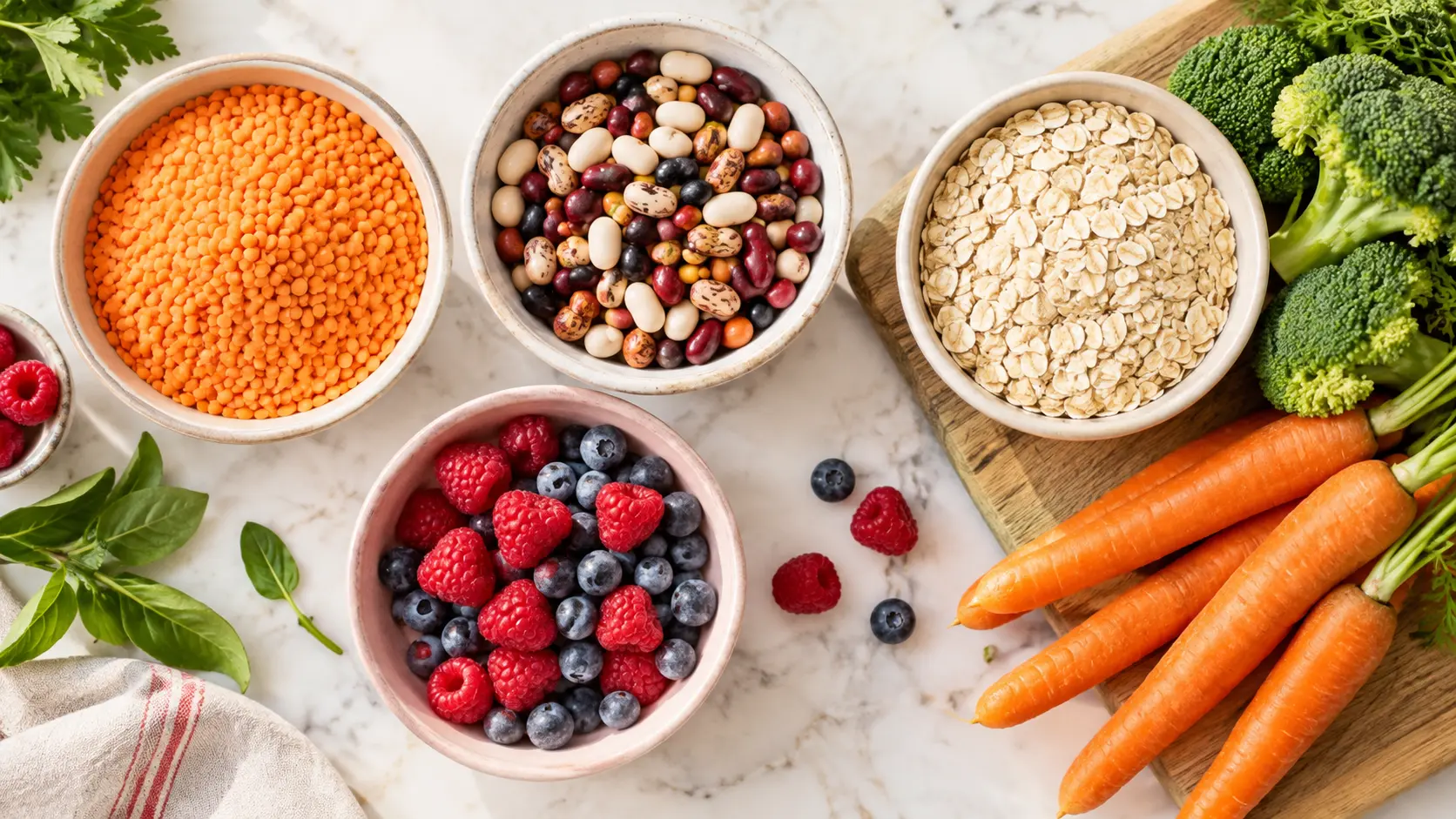
If your feed has been full of oat bowls, lentil stews and chia puddings lately, you have met fibermaxxing. The trend is simple: deliberately eat more fibre, often by building every meal around beans, wholegrains, fruit and vegetables.
For once, a viral food trend points in a direction that nutrition experts mostly agree with. Most of us really do eat too little fibre. The catch is that doing it too fast, or turning it into a competition, can leave you gassy, bloated and wondering why you bothered.
In this guide you will learn what fibre is, how much you need, why most people fall short, what the evidence actually says, and how to raise your intake gently. There is a sample day of eating, a list of high-fibre foods, and a frank look at powders and supplements.
What Is Fibermaxxing?
Fibermaxxing is the social media name for aiming for a high fibre intake, usually at or above the standard daily guidance. Some people track grams in an app. Others simply add a handful of beans or a spoonful of seeds to whatever they are already eating.
The idea is not new. Dietitians have urged more fibre for decades. What is new is the energy around it, and that it is a food-first trend: you are adding things, not cutting them out. Just keep the word "max" in perspective. The aim is a comfortable, sustainable level, not the biggest number you can manage.
What Is Fibre, Exactly?
Fibre is the part of plant foods that your body cannot fully digest. It passes through your gut largely intact, feeding the bacteria that live there and helping everything move along.
You will often hear about two types. Most plant foods contain both, in different proportions.
Soluble fibre
Soluble fibre dissolves in water and forms a soft gel. It slows digestion, which helps you feel full and can smooth out blood sugar rises after a meal. It is also the type linked with lowering LDL ("bad") cholesterol.
Good sources include oats, beans, lentils, apples, carrots, chia seeds and psyllium husk.
Insoluble fibre
Insoluble fibre does not dissolve. It adds bulk and helps food move through your digestive system, which is why it helps with constipation.
Good sources include wheat bran, wholegrain bread, brown rice, nuts, seeds and the skins of many vegetables.
You do not need to count the two types. Eat a wide mix of plants and you get both.
How Much Fibre Do You Need?
Guidance varies a little between countries, so here are the numbers you are most likely to see:
Source | Daily target for adults |
NHS (UK) | About 30 g |
US dietary guidelines (HHS) | About 25 g for women, 38 g for men |
A common rule of thumb is therefore somewhere between 25 and 38 g a day, depending on where you live, your age and your sex. If you are just starting out, 25 to 30 g is a perfectly sensible goal.
Why Do Most People Fall Short?
The NHS says most UK adults eat around 20 g a day, well under the 30 g target. UCLA Health, citing US data, notes that most Americans get roughly 15 g. So this is a common gap in both countries.
There are a few ordinary reasons:
- Refined foods dominate. White bread, white rice, pastries and most breakfast cereals lose much of their fibre in processing.
- Not enough pulses. Beans and lentils are among the best sources, yet many people rarely eat them.
- Peeling and juicing. Skins carry a lot of the fibre, and juice leaves most of it behind.
- Fear of bloating. Some people try fibre once, feel uncomfortable, and quietly stop.
What Are the Benefits? Evidence, Honestly
Fibre is one of the better-supported nutrients, but it helps to be specific.
Digestion and regularity
This is the clearest benefit. Fibre softens and bulks stools, which helps prevent constipation.
Cholesterol
Soluble fibre from foods such as oats and beans can modestly lower LDL cholesterol. It works as part of an overall pattern, not as a standalone fix, and results vary from person to person.
Blood sugar
Because soluble fibre slows digestion, high-fibre meals tend to cause gentler blood sugar rises. Fibre-rich diets are also linked with a lower risk of type 2 diabetes, though that shows association, not proof.
Fullness
Fibre-rich foods are bulky and take longer to eat, so they tend to keep you satisfied. That helps with appetite, but it is not a weight loss guarantee.
Higher fibre intakes are also associated with lower risks of heart disease and bowel cancer, though that evidence is largely observational.
How to Increase Fibre Without the Bloating
Your gut bacteria ferment fibre, and that makes gas. If you jump from 15 g to 40 g overnight, they will let you know. Slow and steady wins.
1. Add 3 to 5 g a week. That might be one extra serving of beans, or swapping white bread for wholemeal.
2. Drink more water. Fibre absorbs fluid. Without enough, it can make constipation worse rather than better. Aim for regular drinks through the day.
3. Spread it out. Include some at every meal and snack rather than one huge bowl in the evening.
4. Cook pulses well. If you use dried beans, soak and cook them thoroughly. Rinsing tinned beans can also help some people.
5. Move a little. Gentle activity helps digestion. A short walk after meals is an easy habit to build in.
Give each step a week or two. Mild gas is normal while your gut adjusts. Ongoing pain or severe bloating is a reason to slow down or speak to a professional.
A Simple Day of Eating
Here is one example day. All fibre numbers are approximate, and they vary by brand, portion and how food is prepared.
Meal | Food | Approx. fibre |
Breakfast | Porridge (40 g oats) with raspberries and 1 tbsp chia seeds | 10 to 11 g |
Snack | An apple with the skin on and a small handful of almonds | 5 g |
Lunch | Big bowl of lentil soup with a slice of wholemeal bread | 9 to 11 g |
Dinner | Chilli with kidney beans, brown rice and a side of broccoli | 12 to 14 g |
Total | About 36 to 41 g |
That is a high day. If you are at 15 to 20 g now, work up to it, or halve the beans and seeds for a version nearer 25 to 30 g.
High-Fibre Foods Worth Stocking
You do not need anything exotic. These everyday foods do the heavy lifting. Figures are approximate.
- Lentils: about 8 g per cup (cooked), according to UCLA Health.
- Beans and chickpeas: kidney beans, black beans, chickpeas and baked beans all deliver several grams per serving. Hummus is a handy option too.
- Oats: porridge or overnight oats. A 40 g portion gives roughly 4 g and provides the soluble fibre linked with cholesterol.
- Berries: raspberries are standout, with about 8 g per cup. Blackberries are also good.
- Chia and flaxseed: one tablespoon of chia gives roughly 3 to 4 g. Soak chia first and drink plenty of water.
- Vegetables: broccoli (about 5 g per cup), peas, carrots, cauliflower, green beans and leafy greens.
- Wholegrains: wholemeal bread, brown rice, wholewheat pasta, bulgur and rye crackers.
- Potatoes with skins on: a baked potato gives roughly 4 g.
If you like to plan ahead, a weekly reset day for meal prep is a good time to cook a pot of lentils or beans for the days ahead. And if you have a sweet tooth, you can still work in fibre: berries, oats and seeds fit nicely into high protein desserts.
Fibre and Your Wider Routine
Lentils and beans give you protein as well as fibre, which suits anyone doing strength training at home. For heart and gut health, easy zone 2 cardio for beginners is another low-stress habit to pair with it.
When to Be Careful
For most healthy adults, eating more fibre gradually is safe. But some people need to be more cautious.
- Irritable bowel syndrome (IBS): some types of fibre, especially insoluble fibre such as bran, can make symptoms worse. Soluble fibre is often better tolerated, but it is individual.
- Crohn's disease or ulcerative colitis: during flares, a high-fibre diet may not suit you. Ask your care team or a registered dietitian.
- Kidney disease: some high-fibre foods are also high in potassium or phosphorus, which may need limiting.
- Previous bowel surgery, strictures or swallowing problems: high fibre can sometimes cause blockages or discomfort.
- Medicines: fibre supplements can affect how some medicines are absorbed. Ask a pharmacist how to space them.
- Unexplained changes: a lasting change in bowel habit, blood in stools or unexplained weight loss needs a doctor, not more fibre.
Hype vs Reality
Social media tends to blur a few things, so here is a grounded view.
You do not need a huge number. The official targets are modest, and I know of no good evidence that extreme intakes are better for most people. A dietitian quoted by UCLA Health advises sustainable habits over a "more is better" approach.
Whole foods come first. Food gives you fibre along with vitamins, minerals and plant compounds that a powder does not.
Powders and supplements have a place, but a small one. Psyllium husk, for example, can help with constipation and may help lower cholesterol. But they are not a substitute for a varied diet. Start with a small dose, take it with plenty of water, and talk to a pharmacist or doctor if you take medicines or have a medical condition.
Fibre-enriched bars and drinks vary a lot, and some are high in sugar or sweeteners. Check the label.
Frequently Asked Questions
How much fibre should I eat a day?
The NHS recommends about 30 g a day for adults. US guidance suggests about 25 g for women and 38 g for men. Aim for the figure that applies to you, and build up gradually.
Why does fibre make me bloated?
Gut bacteria ferment some types of fibre and produce gas. A sudden jump in intake makes this more noticeable. Increase slowly, drink enough water and spread fibre across the day.
What is the difference between soluble and insoluble fibre?
Soluble fibre dissolves into a gel and helps with cholesterol, blood sugar and fullness. Insoluble fibre adds bulk and helps move food through your gut. Plants usually contain both.
Can you eat too much fibre?
Yes, in the sense that very high intakes, especially if you increase them fast, can cause gas, cramps, bloating or constipation. Some people with digestive conditions need to limit it. For most healthy people there is no strict upper limit, but sustainable habits beat extremes.
Are fibre supplements as good as food?
Not quite. Foods provide a mix of fibre types plus nutrients. Supplements can help when food alone is not enough, but they work best as a top-up and should be started slowly with plenty of fluid.
The Bottom Line
Fibermaxxing gets one big thing right: most of us would benefit from eating more fibre, and plant foods are the best way to do it. Aim for roughly 25 to 30 g a day or the guidance for your country, build up slowly, and drink plenty of water.
Skip the extremes. A pot of lentils and some berries on your oats will take you much of the way. If you have a digestive or kidney condition, check with a professional before changing your diet.
This article is general information, not medical advice. If you have a health condition or take medication, speak to your doctor or a registered dietitian before making big changes to your diet.