If you have spent an evening scrolling, felt vaguely worse afterwards, and still had no idea what you would rather have done instead, a dopamine menu is built for exactly that moment. It is a short, personal list of activities that lift your mood or get you moving, sorted into courses like a restaurant menu.
The idea started in ADHD communities and spread fast on TikTok and Instagram. It is simple and free. It also gets the science of dopamine a little wrong, which is worth knowing first.
In this guide you will learn what a dopamine menu is, what the science really says, how to build your own in six steps, and what to put in each course. There is an example menu to copy and a plain note on when to ask for support.
What Is a Dopamine Menu?
A dopamine menu (sometimes called a "dopamenu") is a personalised list of things you enjoy or find energising, grouped so you can pick something quickly. The format is borrowed from a restaurant:
- Starters: tiny boosts that take five minutes or less.
- Mains: satisfying activities that take longer and genuinely fill you up.
- Sides: small extras that make another activity better, such as music while you tidy.
- Desserts: easy, familiar comforts that feel good now but can leave you flat if you overdo them, like scrolling or binge-watching.
- Specials: occasional bigger treats that need time, money or planning.
The concept is widely credited to Jessica McCabe of How to ADHD and ADHD coach Eric Tivers. They designed it for people whose brains find it hard to start boring tasks and easy to slide into whatever is closest to hand. The menu works as a pre-decided answer to "what should I do now?", written when you are thinking clearly rather than when you are tired and your phone is within reach.
Is the Science Real? An Honest Look at "Dopamine"
Online, "dopamine" often gets used as shorthand for "feel-good chemical". That is a simplification, and it matters.
Dopamine is a brain messenger involved in motivation, learning, movement and anticipating reward. It is more about wanting and getting started than about pleasure itself. It is also only one part of a large system that includes other chemicals and brain regions. You cannot measure your dopamine by how you feel on a Tuesday, and you cannot top it up like a battery.
That is why the related trend of the "dopamine detox" is on shaky ground. You cannot detox a chemical your brain makes all the time, and sitting in a bare room will not reset it. Cutting back on habits that take over your day can still feel useful, but the benefit comes from changing behaviour and attention, not from draining dopamine.
So where does that leave the menu? Honest answer: it is a practical tool, not a clinically tested treatment. I could not find robust trials showing that dopamine menus themselves improve wellbeing, so treat claims that they "rewire" your brain with a pinch of salt.
Why It Can Still Help
The reasons the menu works have little to do with brain chemistry hacks. They are ordinary psychology:
- It removes a decision. When you are tired or low, choosing is hard. A ready list makes the first step easier.
- It swaps instead of banning. Telling yourself "no phone" tends to leave a gap. A menu gives your hand something else to reach for. If scrolling is the main habit you want to change, pair it with this guide to stop doomscrolling.
- It borrows from behavioural activation. This is a well-established part of cognitive behavioural therapy for low mood. The idea is that doing small, valued activities helps mood and motivation, rather than waiting until you feel like it. A menu is a friendly, informal cousin of that approach.
- It teaches you what helps. Over a few weeks you notice which items leave you better off and which only fill time.
How to Build Your Own Dopamine Menu: Step by Step
You need a piece of paper or a notes page and about 20 minutes.
1. Start with what you already enjoy. Think back over the last month. When did you feel absorbed, calm or pleased with yourself? Write down every moment, however small.
2. Notice what you actually reach for. Be honest about your usual habits, including scrolling and snacking. These are your dessert candidates.
3. Sort ideas into courses. Use the five headings above. Aim for four to six items per course.
4. Make each item specific and easy. "Exercise" is vague. "Stretch for three minutes by the window" is something you can do right now.
5. Remove friction. Keep a notebook where you will see it, put the paints on a visible shelf, leave the walking shoes by the door.
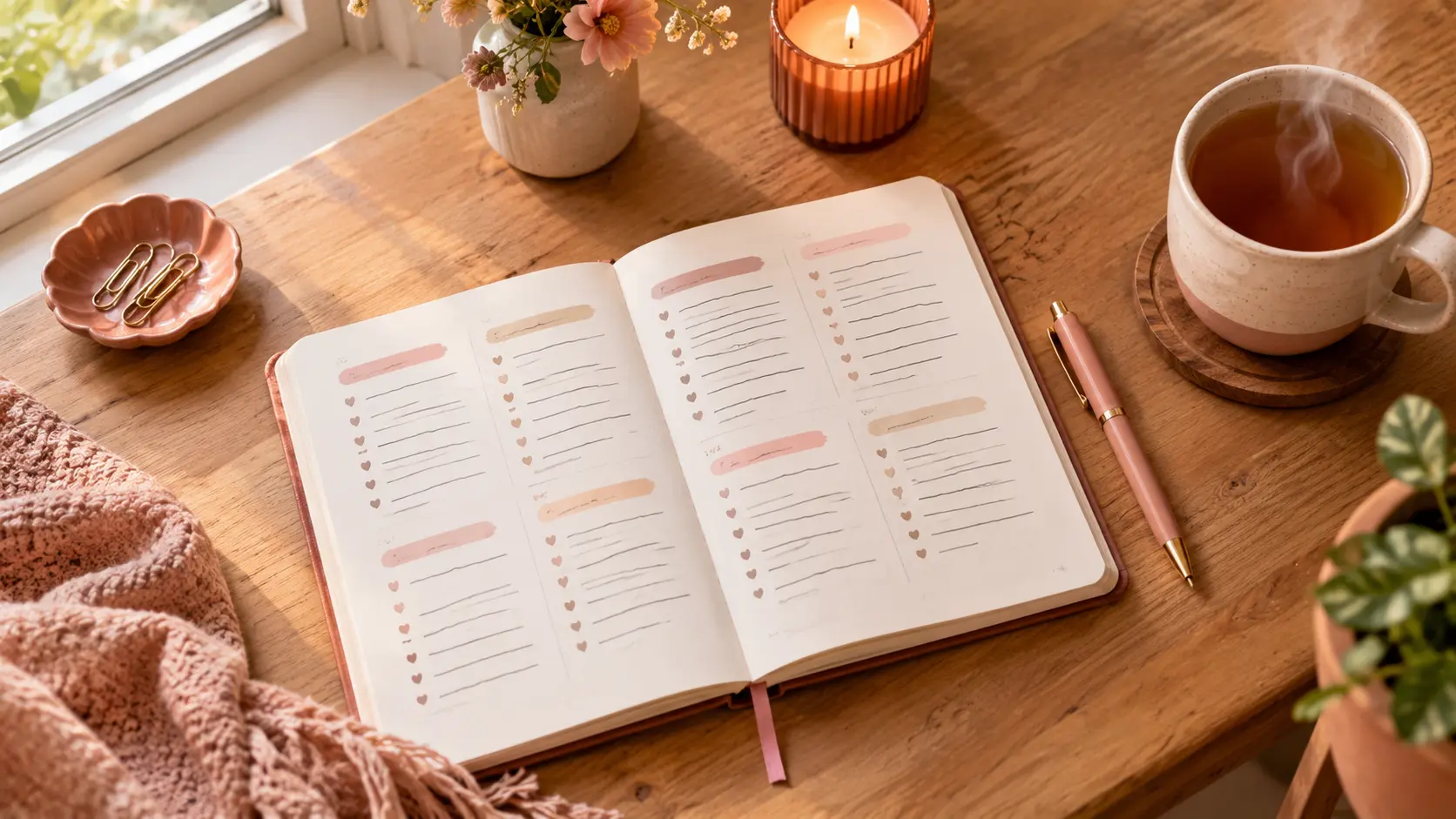
6. Put it where you will see it. Fridge door, desk, phone wallpaper or the inside cover of your diary. Then review it monthly and cross off what no longer appeals.
What to Put in Each Course
Starters: Five Minutes or Less
These are for when you are stuck and need a gentle push. They should feel almost too easy.
- Step outside and look at the sky for two minutes
- Make a hot drink and drink it without your phone
- Play one favourite song and move to it
- Do a short body stretch or roll your shoulders
- Try a 5-minute meditation for beginners
Mains: Satisfying and Fuller
Mains take 20 minutes to a couple of hours and tend to leave you feeling better afterwards. These are the heart of your menu.
- A walk around the neighbourhood, or try interval walking from Japan if you like a bit of structure
- Drawing, painting or knitting, which can quieten a busy mind (if that mind loops, see how to stop overthinking)
- A bath or long shower with the lights low
- Reading a chapter of a good book
Sides: Little Extras
Sides are not activities on their own. They make another activity easier or more enjoyable.
- A podcast or playlist while folding laundry
- A timer, so a dull task has an end point
Desserts: Enjoy, But Keep an Eye on the Portion
Desserts are not "bad". They are easy comfort, and a small portion can be lovely. The trouble comes when they replace mains and stretch from ten minutes into three hours.
- Short-form video or social media (set a timer first)
- A TV episode, one at a time
A useful test: how do you feel ten minutes after you stop? If the honest answer is "worse" or "empty", the item belongs in the dessert column, with a limit beside it.
Specials: Plan Ahead
Specials are the things you look forward to. They help when life feels flat because nothing is on the horizon.
- A day trip, a weekend away or a haircut
- A planned weekly reset day with your favourite things lined up
An Example Dopamine Menu You Can Copy
Use this as a starting point, then swap in your own favourites. It is laid out so you could copy it onto a card.
Course | Ideas | Time |
Starters | Sun on your face by the window; one favourite song; glass of water and a stretch | 2 to 5 minutes |
Mains | 20-minute walk; cook something simple; sketch or paint; chapter of a book | 20 to 90 minutes |
Sides | Podcast while tidying; candle while reading; timer on a dull task | Added on |
Desserts | One TV episode; 15 minutes of scrolling with a timer | Limit and enjoy |
Specials | Day trip; haircut; film night out; meal with a friend | Plan weekly or monthly |
Tips for Low-Energy Days
Some days even a starter feels like climbing a hill. A few tweaks help:
- Make a "bare minimum" section. Three items that need almost nothing: water, fresh air, one song.
- Choose from the bottom of the menu, not the top. A two-minute stretch counts. So does opening a window.
- Lower the bar. Five minutes is a full success. You can stop whenever you like.
- Be kind about it. If you have been running on empty for weeks, rest may matter more than a longer list. See burnout recovery for pacing and rest.
Common Mistakes to Avoid
- Making it too ambitious. A menu full of marathons and cold plunges will sit unused. Be realistic.
- Filling it with other people's ideas. If you do not enjoy it, it does not belong on your list.
- Pretending desserts do not exist. Banning them usually backfires. Give them a place and a limit.
- Expecting it to fix a medical problem. A menu can support your day, but it cannot treat ADHD, depression or anxiety.
Who a Dopamine Menu Suits, and When to Get Support
A menu tends to suit people who:
- struggle to start tasks or often feel bored and restless
- find themselves scrolling when they would rather be doing something else
- live with ADHD and want a visual, low-effort prompt
It is not a treatment, and it is not a replacement for professional care. Speak to a GP or another qualified health professional if:
- low mood, loss of interest or lack of motivation lasts more than two weeks
- you find it very hard to focus, organise or finish things, and it has affected work, study or relationships for a long time (this can be a sign of ADHD, and a proper assessment is worthwhile)
- you have thoughts of harming yourself. In an emergency, contact your local emergency number or a crisis line straight away.
Frequently Asked Questions
What is a dopamine menu?
It is a personal list of activities sorted into courses (starters, mains, sides, desserts and specials) that you can choose from when you are bored, stuck or tempted to scroll.
Does a dopamine menu actually work?
It can help as a practical planning tool, because it removes decisions and swaps one habit for another. However, there is little direct research on dopamine menus themselves, so view them as a helpful routine rather than proven therapy.
Can you really boost or detox dopamine?
Not in the way social media suggests. Dopamine is part of a complex system for motivation and reward, and you cannot drain or refill it on demand. Enjoyable, meaningful activities can improve how you feel, but the "chemical" explanation is oversimplified.
How many items should a dopamine menu have?
Around four to six items per course is plenty. Too many and you will not use it. Start small and add as you learn what you enjoy.
Is a dopamine menu only for ADHD?
No. It started in ADHD communities, but anyone who struggles with motivation, procrastination or too much screen time can use one. If you suspect ADHD, speak to a healthcare professional rather than relying on a menu.
The Bottom Line
A dopamine menu will not rewire your brain, and "dopamine" is a messier story than the videos suggest. But as a simple way to plan better choices, build in small pleasures and give yourself something kind to do when you feel stuck, it is a lovely idea.
Start tonight. Write three starters, two mains and one dessert with a limit. Put the list somewhere you will see it, and change it as you learn. If low mood or focus problems keep getting in the way, speak to a health professional.
This article is general information, not medical advice. If you have a health condition, or you are worried about your mood or concentration, please speak to your doctor.