Protein is everywhere right now. It is in cereal, crisps, coffee and even sparkling water, and every other video seems to tell you to eat more of it. So how much protein per day do you actually need?
The honest answer is "less than the marketing suggests, but a little more than the bare minimum for some people". Most healthy adults already eat enough. Others, such as older adults, people lifting weights and anyone eating very little, can benefit from aiming higher.
In this guide you will find the standard numbers, simple worked examples for different body weights, how to spread protein through the day, which foods deliver the most, and where the hype runs ahead of reality.
What Is the Standard Daily Protein Recommendation?
For a healthy adult, the standard figure is 0.8 grams of protein per kilogram of body weight per day. That is the Recommended Dietary Allowance used in the United States, which works out at roughly 0.36 grams per pound. UK guidance is a touch lower, at 0.75 grams per kilogram for an adult at a healthy weight.
Both numbers are close, and neither is a cap. The RDA is the amount needed to avoid deficiency, not a target for thriving. Think of it as the floor, not the ceiling.
Two things are worth knowing:
The figure is based on your body weight, not your calorie intake or your age.
It covers protein from all foods, including bread, rice and vegetables, not just meat and eggs.
Why Some People Need More Than the Minimum
Many dietitians suggest higher intakes for certain groups. These are commonly used guideline ranges, not strict rules, and they vary a little from one source to another.
Group | Typical range (g per kg per day) |
Healthy adult, light activity | 0.75 to 0.8 |
Regular vigorous exercise | about 0.8 to 1.2 |
Strength training or endurance training | about 1.2 to 2.0 |
Adults over 65 | about 1.0 to 1.2 |
Older adults
Muscle slowly declines with age, and older bodies seem to respond less strongly to a small dose of protein. That is why people over 65 are often advised to aim for roughly 1 to 1.2 grams per kilogram.
Strength training and active people
If you lift weights, your muscles need raw material to repair and grow. Ranges of 1.2 to 2 grams per kilogram are often quoted for people training hard. If you are just starting, our guide to strength training at home for beginners is a gentle place to begin, and you will likely sit at the lower end of that range.
Gentler movement counts too. If your week is mostly walking and a few classes, such as pilates at home, you probably do not need to go far beyond the standard guidance.
Other situations
Pregnancy, recovery from illness or surgery, and some weight-loss medicines can change protein needs. Some guidance mentions 75 to 100 grams a day for pregnancy, but check with your doctor. If you are on a weight-loss injection, ask a dietitian for a personal target, because appetite can drop sharply and protein is easy to miss.
How to Calculate Your Daily Protein
The sum is simple: multiply your weight in kilograms by the grams per kilogram that suits you. If you would rather skip the maths, try our free protein calculator.
Here are worked examples. Remember that 1.2 and 1.6 are guideline ranges for active people, and all figures are rounded.
Body weight | At 0.8 g/kg (general minimum) | At 1.2 g/kg (active or older) | At 1.6 g/kg (strength training) |
55 kg (about 8 st 9 lb) | 44 g | 66 g | 88 g |
70 kg (about 11 st) | 56 g | 84 g | 112 g |
85 kg (about 13 st 5 lb) | 68 g | 102 g | 136 g |
A few tips for using this table:
1. Pick the column that matches your life, not the biggest number.
2. If you are carrying a lot of extra weight, a dietitian may base your target on a healthier weight rather than your current one.
3. Treat the result as a range. Landing 10 grams either side is perfectly fine.
Spreading Protein Across Your Day
Many of us eat a tiny breakfast, a modest lunch and a huge protein-heavy dinner. Protein may work better when it is spread over meals and snacks rather than packed into one sitting.
A practical target is about 20 to 30 grams per meal for most adults. That might look like:
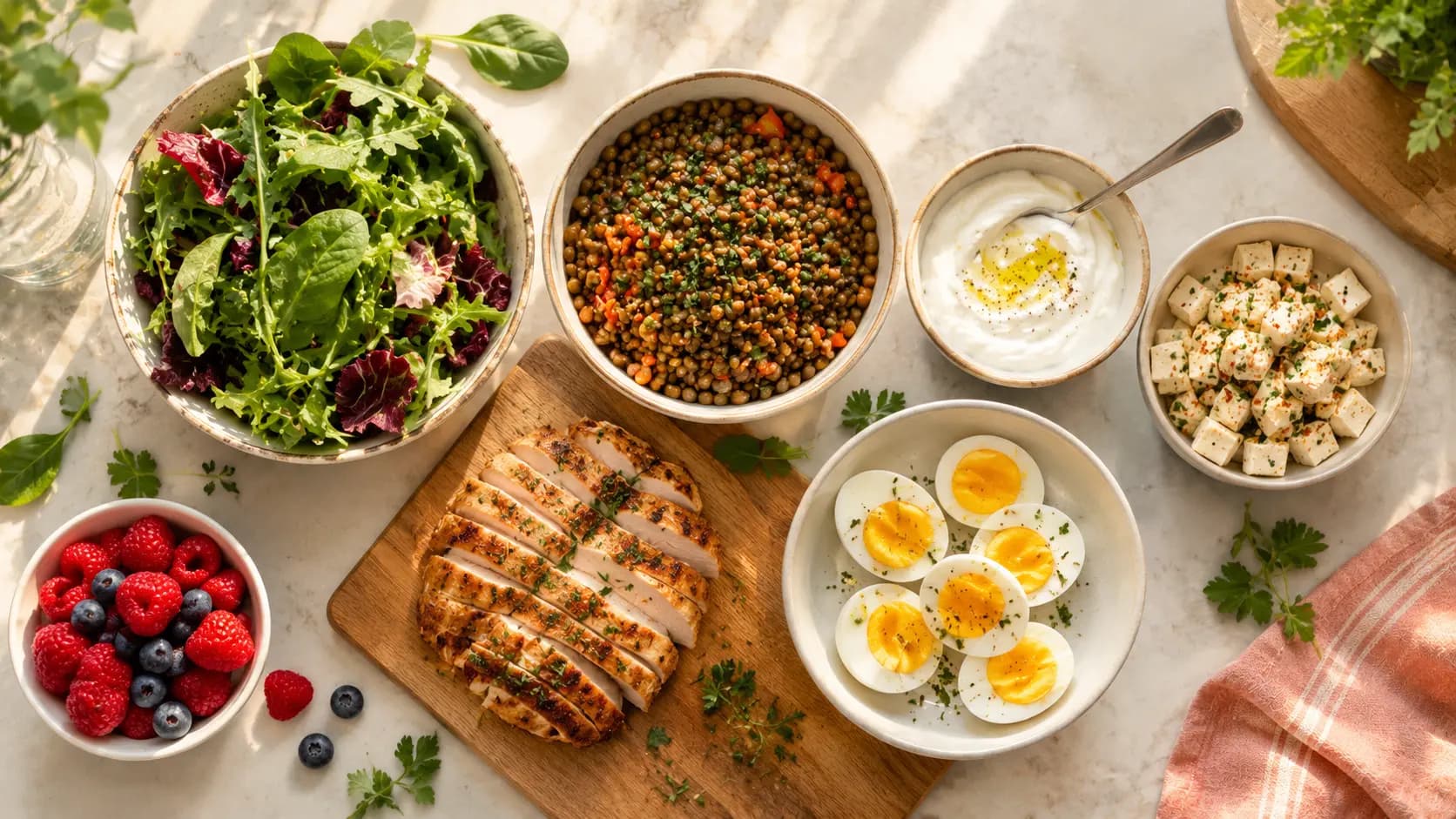
Breakfast: Greek yoghurt with oats and seeds, or two eggs on wholegrain toast
Lunch: A lentil and vegetable soup with cottage cheese or a tin of tuna on the side
Snack: A small handful of nuts, a glass of milk or hummus with carrots
Dinner: Chicken, fish, tofu or beans with plenty of vegetables
You do not need to be exact. If breakfast is usually your weak spot, fixing that one meal often closes most of the gap.
Good Protein Foods and Approximate Amounts
Protein content varies by brand and cooking method, so treat the figures below as approximate. Check labels for the exact amount.
Food | Typical portion | Approx. protein |
Chicken breast, cooked | 100 g | 30 g |
Tinned tuna, drained | 100 g | 25 g |
Tempeh | 100 g | 18 to 20 g |
Greek yoghurt, plain | 170 g pot | 15 to 17 g |
Firm tofu | 100 g | 12 to 15 g |
Lentils, cooked | 150 g | 12 to 13 g |
Cottage cheese | 100 g | 11 g |
Chickpeas, cooked | 150 g | 10 to 11 g |
Egg, large | 1 egg | 6 to 7 g |
Milk | 250 ml | 8 g |
Peanut butter | 2 tablespoons | 7 to 8 g |
Notice how quickly it adds up. Two eggs, a pot of yoghurt, a portion of lentils and a piece of chicken or tofu land you comfortably above 70 grams without a single supplement.
Do not forget the hidden protein
Wholegrains, oats, nuts and seeds add a few grams each, plus fibre. Our fibermaxxing guide explains how to build fibre up without feeling bloated, which is a common side effect of suddenly eating more beans and protein bars.
Plant-Based Protein Tips
You can meet your needs without meat. It just takes a little planning, especially if you are vegan.
Mix your sources. Beans, lentils, tofu, tempeh, edamame, nuts, seeds and wholegrains all contribute. Eating a variety through the day covers the full range of amino acids.
Build meals around legumes. A bowl of dal, chilli or a chickpea curry can easily deliver 15 to 20 grams.
Use soya. Tofu, tempeh and soya milk are among the most protein-dense plant options.
Go slightly higher if needed. Plant proteins can be a little less easily digested, so some dietitians suggest aiming a bit above the minimum if you rely on them entirely.
Protein Hype vs Reality
Protein has become the health halo of the decade. Here is what holds up and what does not.
More is not always better
Once your needs are met, extra protein does not automatically turn into extra muscle. Surplus protein is used for energy or stored like other calories. Results for high-protein diets and weight loss are mixed, too.
Powders and bars are optional
Protein powder is a convenient food, not a necessity. If you struggle to reach your target, it can help. If you already eat enough, a scoop will not add anything meaningful. Many bars are also high in sugar, saturated fat or additives, so read the label.
If you like a sweet treat that does a bit of extra work, our collection of high protein desserts uses ordinary ingredients like yoghurt and cottage cheese rather than powders.
Making it easier through the week
The simplest way to hit your numbers is to cook once and eat several times. A weekly reset day is a good moment to batch-cook lentils, boil eggs and portion out chicken or tofu, so protein is already waiting when you are tired and hungry.
Who Should Be Careful With High-Protein Diets?
For most healthy people, eating a bit more protein than the minimum is considered safe. But a few groups should talk to a professional first:
People with kidney disease. Damaged kidneys may have to work harder with a lot of protein. Regularly eating over 2 grams per kilogram may strain kidneys, particularly if they are already affected. Always follow the advice from your kidney team.
Pregnant or breastfeeding women. Needs are higher, but your midwife or doctor can give tailored advice.
Anyone on a medical or therapeutic diet. This includes liver conditions, metabolic disorders and some digestive conditions.
If you are unsure, a registered dietitian can set a target that fits your health, medication and goals.
Signs You May Not Be Getting Enough Protein
True protein deficiency is uncommon in healthy adults who eat enough food. But if your overall intake is low, you may notice some of these signs:
Feeling hungry again soon after meals
Losing muscle strength or noticing slower recovery after exercise
Brittle nails, thinning hair or slow-healing wounds
None of these prove a protein shortfall, because many things can cause them. If several apply and you are eating very little, or you are concerned, speak to your GP before making big changes.
Frequently Asked Questions
How much protein per day do I need?
Most healthy adults need about 0.75 to 0.8 grams per kilogram of body weight. For a 70 kg person, that is around 53 to 56 grams. Older adults and people who train hard are often advised to aim higher.
Is 100 grams of protein a day too much?
For many adults, no. 100 grams is within the commonly quoted ranges for active people or someone around 85 kg. It may be more than you need if you are small and mostly sedentary, and people with kidney disease should check with their doctor first.
Can I get enough protein without meat?
Yes. Lentils, beans, tofu, tempeh, soya milk, nuts, seeds and wholegrains, along with eggs and dairy if you eat them, can meet your needs with a little planning.
Do I need protein powder?
No. Powders are a convenience. If you can reach your target with normal meals, you do not need one.
Is it better to eat protein all at once or spread out?
Spreading it over the day, around 20 to 30 grams per meal, appears to be a sensible approach for most people, though total daily intake matters most.
What are the signs of too little protein?
Persistent hunger, loss of muscle strength, slow recovery, and brittle nails or thinning hair can be signs, though they have many other causes. See your GP if you are worried.
Protein matters, but it does not need to take over your plate. For most healthy adults, 0.75 to 0.8 grams per kilogram is the baseline, and many older or very active people do better somewhere between 1 and 2 grams per kilogram. Spread it across your meals, favour real food, and treat powders as an optional extra.
Start with one meal. Add a boiled egg, a spoon of yoghurt or a handful of lentils, and see how you feel. Small, steady changes beat any trend.
This article is general information, not medical advice. If you have a health condition, are pregnant, or take medication, speak to your doctor or a registered dietitian before changing your diet.