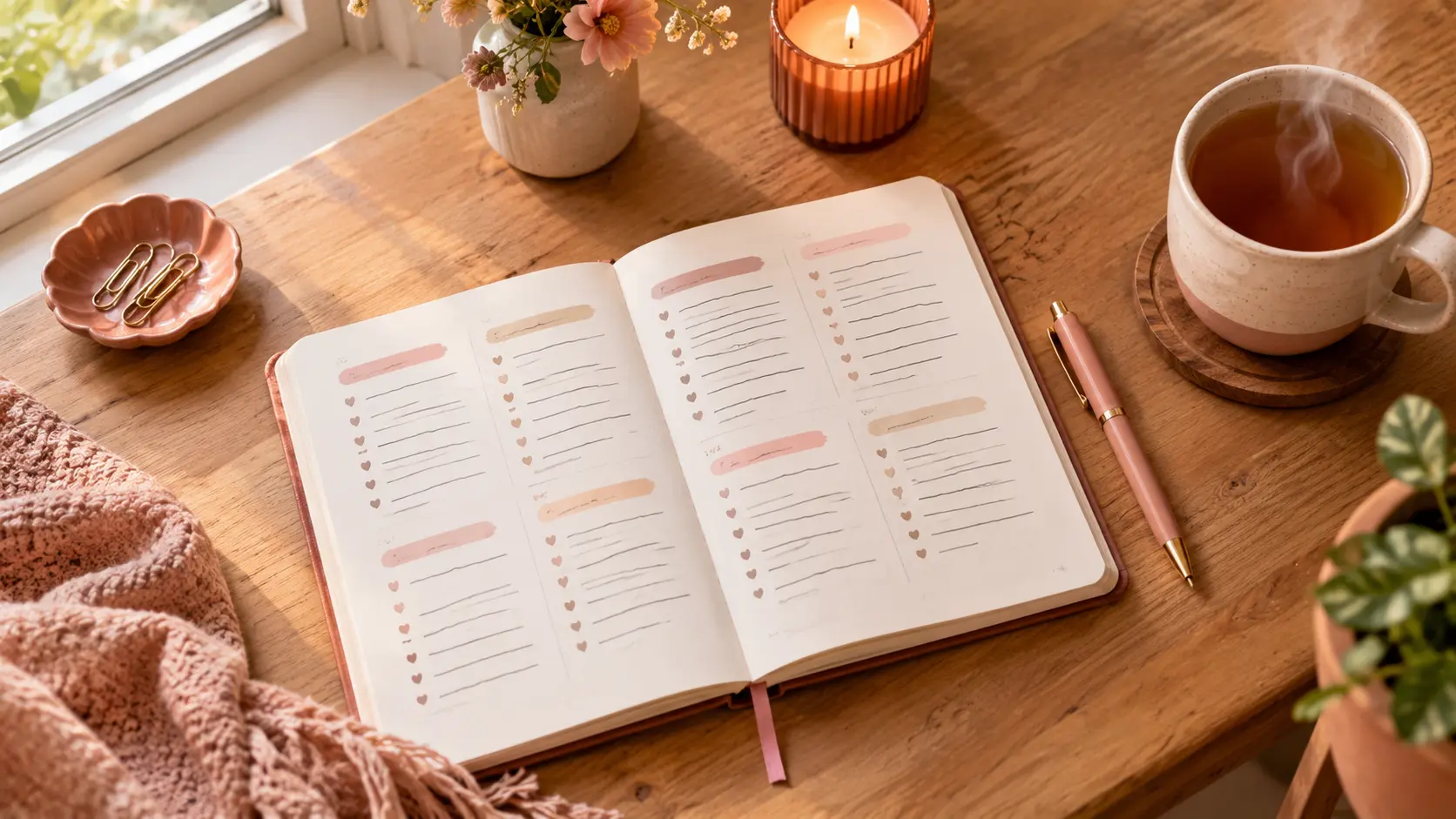
How the planner builds your day
The planner takes one task at a time from each area you choose, so your day has some variety and does not become three hours of cleaning. Easy tasks come first, and a short break is added after a run of tasks. Every plan fits inside the time you give it, and any spare minutes are shown, so you are not left with a list you cannot finish.
What a good reset day includes
A reset day works best when it covers a little of everything rather than a lot of one thing. Tidying a surface or two, a short walk, a few minutes of quiet and a look at next week's calendar can be enough. Our guide to the weekly reset day explains the idea in more detail, with examples you can copy.
Tips to keep it kind
- Start small. One or two areas and 60 to 90 minutes is a good first try.
- Include rest. Rest is part of the plan, not a reward for finishing it.
- Keep the same time each week. A regular slot makes the habit easier to keep.
- Skip without guilt. If a task does not fit, leave it for next week.
If you feel worn out all the time
A reset day helps with everyday overload, but it is not a fix for deep exhaustion. If you feel drained for weeks, our guide on burnout recovery looks at the bigger picture, and a doctor or other professional can help if it is affecting your health.